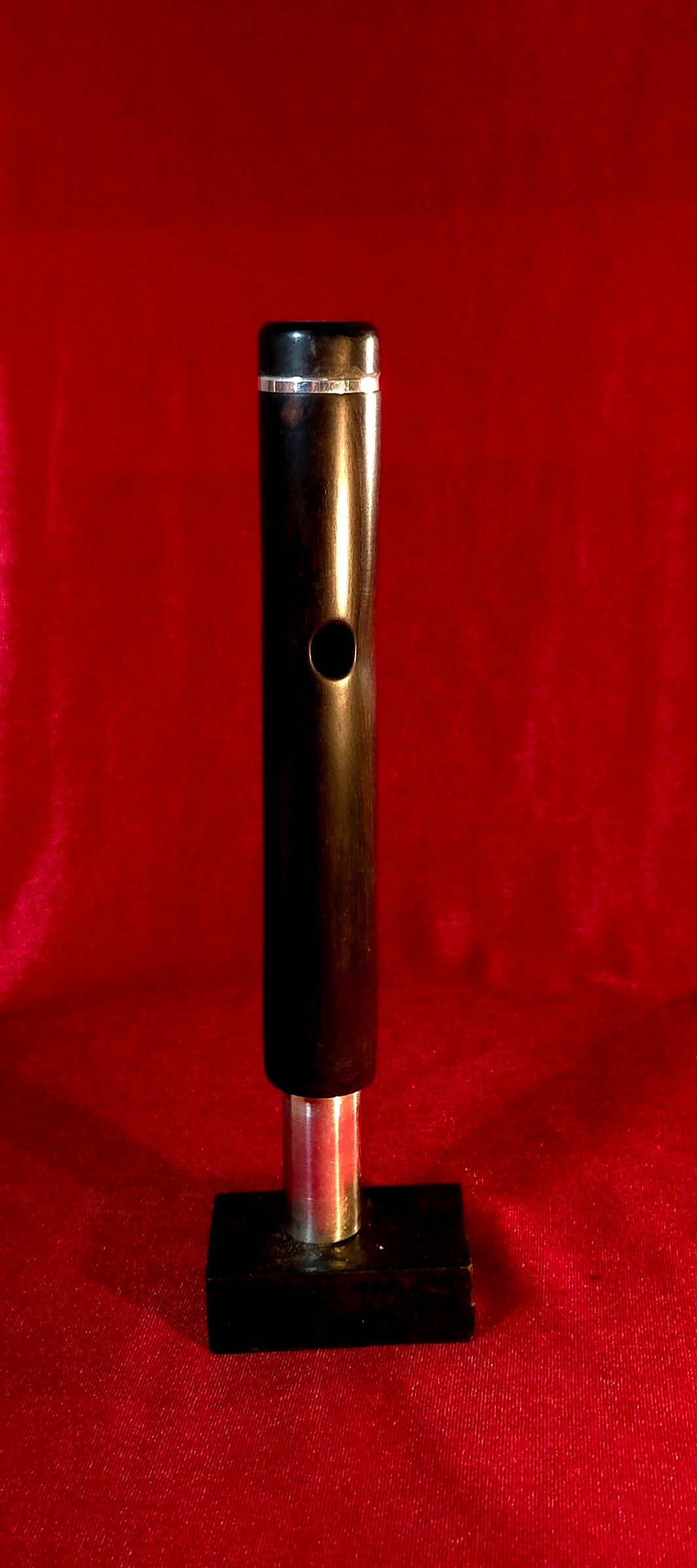
WHY OWNING A SECOND WOODEN HEADJOINT — ACCORDING TO MARCELLO DI ROSA-MARIA, FLUTIST AND CRAFTSMAN
Wooden headjoints, most often made from grenadilla, offer a warm, dense, and finely nuanced sound that contrasts beautifully with the brilliance of metal headjoints. Their timbre blends naturally with the color of the woodwind section in an orchestral setting.
More and more flutists are choosing to own a wooden headjoint as a second sound option, allowing them to adapt their playing to different repertoires or musical contexts. It is an excellent way to expand one’s expressive palette and rediscover the flute through a new sonic voice.
POURQUOI AVOIR UNE DEUXIÈME TÊTE EN BOIS, SELON MARCELLO DI ROSA-MARIA. FLUTIST ET ARTISAN
Les têtes en bois, généralement en grenadille, offrent une sonorité chaleureuse, dense et nuancée, qui contraste avec l’éclat des têtes en métal. Leur timbre s’intègre naturellement à la couleur de la section des bois en orchestre.
De plus en plus de flûtistes choisissent d’en avoir une en bois, afin de disposer d’une seconde option sonore et d’adapter leur jeu selon le répertoire ou le contexte musical. C’est un excellent moyen d’élargir sa palette expressive.